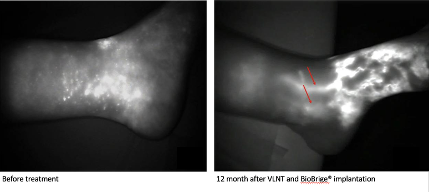
Treatment with BioBridge scaffolds, both as a standalone approach and in conjunction with autologous lymph node transfer, has been shown to support lymphangiogenesis.
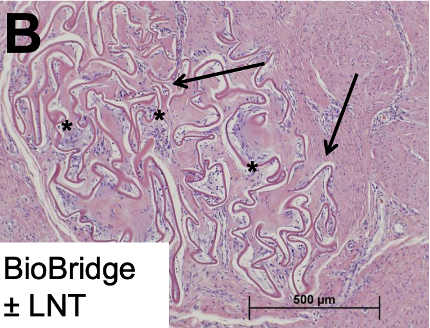
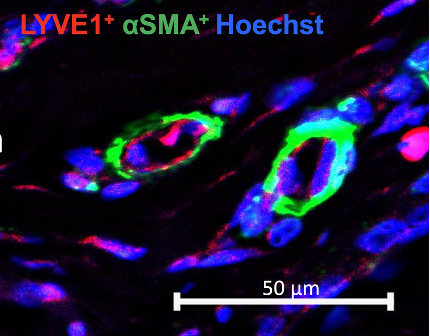
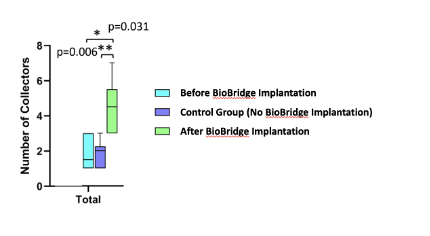
In a porcine model of induced secondary lymphedema, three months after implantation, the nanofibrillar scaffold demonstrated high biocompatibility, accompanied by substantial cellular infiltration within the scaffold structure. Immunofluorescent analysis revealed a significant increase in the number of lymphatic collectors in close proximity to the scaffold.
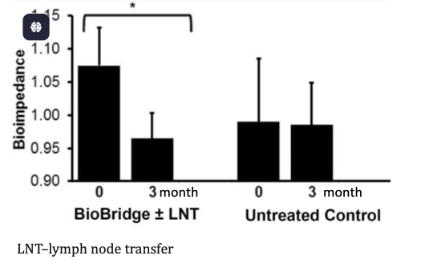
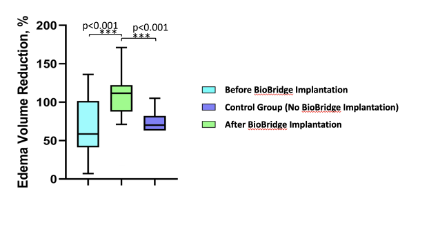
This was associated with restoration of lymphatic drainage, reflected by improved bioimpedance measurements and a reduction in tissue fluid accumulation.